Modeling Decision-Making Dynamics and Brain Activities
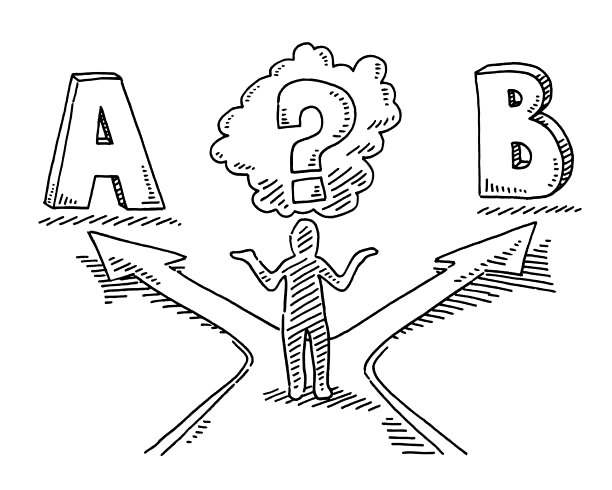 image credit to this website
This project develops innovative methodologies and scalable computational frameworks for modeling human decision-making dynamics, learning robust and interpretable representations from functional magnetic resonance imaging (fMRI) data, and enhancing our understanding of mental health.
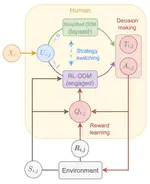
We propose a novel framework that integrates reinforcement learning with the drift-diffusion model to jointly analyze choices and response times. Motivated by evidence that individuals may switch between multiple decision-making strategies, we incorporate latent state transitions using a hidden Markov model. Furthermore, we introduce a multi-task learning framework to simultaneously model multiple behavioral tasks, enabling information to be shared across tasks and allowing each task to benefit from insights gained from the others. Our framework reveals that patients with major depressive disorder show lower overall engagement and reduced focus than healthy controls, and take longer to make decisions when engaged and focused. Additionally, we find that neuroimaging measures of brain activity are associated with decision-making characteristics in the engaged state, but not in the lapsed state, providing evidence for brain–behavior associations specific to engagement. Whlie the observed response times do not predict treatment response, shared parameters identified by our framework are predictive of treatment responses, demonstrating potential as new behavioral markers of therapeutic outcomes.
Currently, we are developing methods to jointly model behavioral tasks and neuroimaging data to uncover latent neural dynamics and further elucidate brain–behavior relationships.